


Nature - 2019 July - Vol 571 No 7764
Publisher: Nature
Format: Paperback
ISBN: 9770028083095
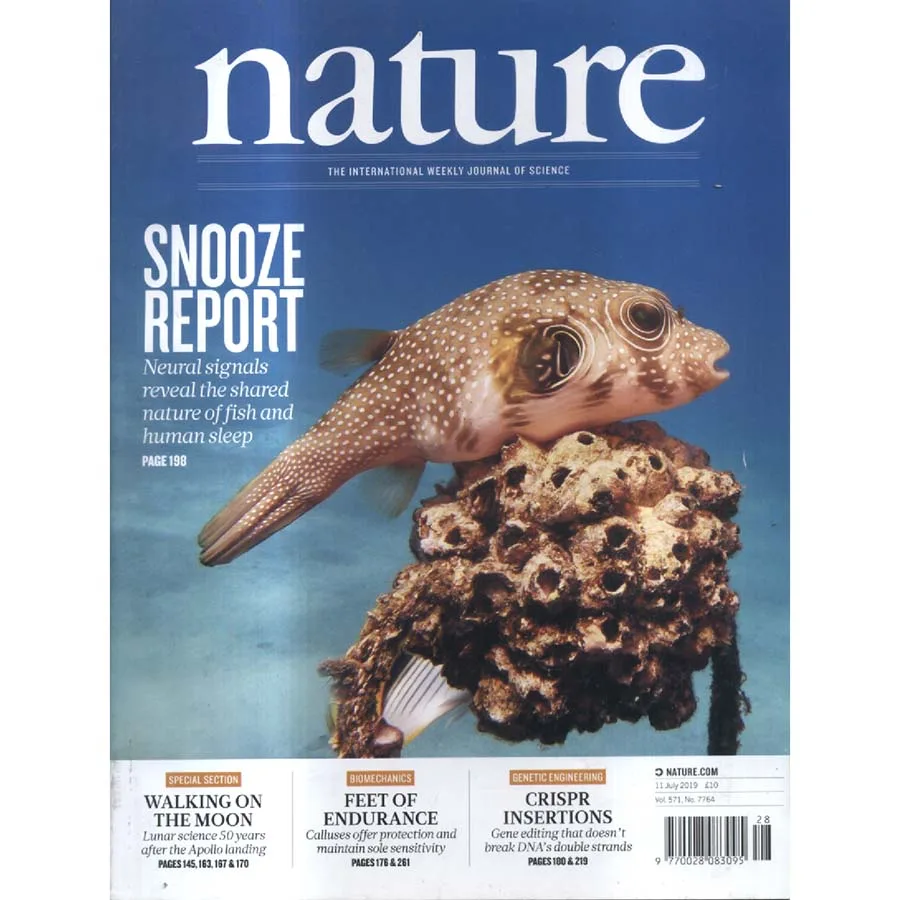
There are few things more comforting than discovering that even fish are exhausted. Nature – July 2019, Vol. 571 No. 7764 arrives beneath the wonderfully sleepy headline “SNOOZE REPORT”, featuring a pufferfish-looking creature perched on coral with the expression of someone who has just survived a very long committee meeting.
The lead feature explores neural signals revealing the shared nature of fish and human sleep, proving once again that science is steadily uncovering profound biological truths humanity could probably have guessed after observing literally anything alive for more than ten minutes. Somewhere inside this issue are researchers carefully analysing neural activity while the fish itself appears deeply committed to doing absolutely nothing.
The cover photograph is genuinely magnificent. The fish stares into the middle distance with the unmistakable energy of a creature who has emotionally checked out of modern civilisation. It is difficult not to identify with it. One suspects this became the unofficial mascot of postgraduate students everywhere.
And naturally, because this is Nature, the issue immediately broadens into a full spectrum of scientific ambition. There are lunar science retrospectives marking 50 years since Apollo 11, biomechanics studies on human feet, and CRISPR-based genetic engineering that edits DNA without breaking its double strands. In other words: sleepy fish, moon landings, calluses, and gene editing. The editors clearly believe readers should experience all of human knowledge simultaneously.
The Apollo section is especially charming because it reminds readers that humanity once walked on the Moon using computers less powerful than modern microwaves. Fifty years later, scientists are still analysing lunar discoveries while simultaneously editing genes with precision tools that would have sounded completely fictional during the space race.
Meanwhile, the “Feet of Endurance” article quietly confirms that even calluses have become worthy of advanced biomechanical analysis. There truly is no aspect of existence that science will not eventually dissect into diagrams and peer-reviewed conclusions.
And then there is “CRISPR Insertions”, another reminder that by 2019 biology had entered its “gently rewriting life itself” era. Nature discusses this with its usual extraordinary composure, casually placing revolutionary genetic engineering beside a photograph of a sleepy fish as though these developments carry equal emotional weight.
One of the enduring joys of Nature is precisely this tonal balance. The magazine calmly presents discoveries that could transform medicine, reshape humanity, or explain consciousness itself, all while maintaining the aesthetic serenity of a luxury brochure for highly intelligent people.
Owning a copy of Nature also creates a very specific atmosphere. It suggests someone intellectually curious, scientifically literate, and perhaps capable of discussing fish sleep cycles over coffee. Whether you actually read the neural-signalling paper or simply admired the exhausted fish on the cover while feeling seen on a spiritual level is beside the point.
This July 2019 issue now feels like a wonderfully strange time capsule from the late 2010s — an era where science increasingly blurred the lines between astonishingly advanced and oddly relatable. The more researchers learned about brains, genes, and biomechanics, the more obvious it became that humans are merely extremely complicated animals trying to manage tiredness and structural maintenance.
Condition is listed as Good, meaning this copy has survived the standard hazards faced by elite scientific journals: crowded backpacks, coffee-adjacent desks, abandoned bedside reading piles, and years spent waiting patiently for someone to finally finish the CRISPR article.
A superb issue for science enthusiasts, sleep-deprived academics, marine-life fans, or anyone who enjoys magazines that casually connect pufferfish naps, lunar exploration, and genetic engineering into one beautifully surreal package.
Keep browsing: See more Nature Journal books Other books by Nature
